Friday
Apr272012

NATURAL GRASS VS SYNTHETIC TURF ATHLETIC FIELD COSTS: PART 4

This is part of a blog post series intended to be an accurate and unbiased discussion of sports field construction and maintenance costs for high performance natural grass sports fields as compared to synthetic turf.

Natural Grass vs Synthetic Turf: A Comparison of Construction and Yearly Maintenance Costs

Cost Comparison - Yearly Outsourced Labor

Common outsourced labor for high performance natural grass fields includes regularly scheduled deep tine aerification and topdressing. For artificial turf, deep cleaning and disinfecting should be part of the yearly maintenance routine. Keeping track of a field's GMAX measurement should also be considered each year, as well.

Texas Multi-Chem | Natural Grass vs Synthetic Turf Costs | Outsourced Labor

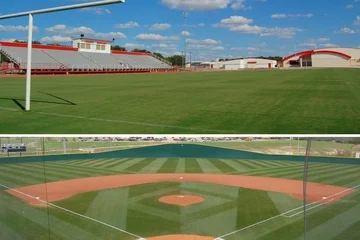
Texas Multi-Chem | Natural Grass vs Synthetic Turf Costs | Kerrville Tivy Baseball Field

Cost Comparison - Yearly Equipment Maintenance Costs

The most regularly utilized equipment for maintaining high performance natural grass sports fields are a reel mower and an aerator. The purchase price of this equipment is amortized over a number of years. Regular maintenance costs including care for the mower blades and tine replacement for the aerator should be part of the yearly budget. For synthetic turf fields, in addition to the amortized purchase price for a groomer and sweeper, common service and repairs include brush replacement and should be included in the yearly budget as well.

Texas Multi-Chem | Natural Grass vs Synthetic Turf Costs | Yearly Equipment Maintenance Costs

Cost Comparison - Field Renovation and Resurfacing Costs

About every eight years (some synthetic fields don't last this long, very few fields last longer), the synthetic turf and infill material will need to be replaced on artificial turf sports fields. As long as a facility has this sort of a playing surface, resurfacing will be a large recurring expense for the organization. Renovation costs for high performance natural grass sports fields will likely consist of an occasional resodding effort - usually to help address high traffic areas (e.g. between the hashes on a football field).

Texas Multi-Chem | Natural Grass vs Synthetic Turf Costs | Renovation and Resurfacing Costs

Cost Comparison - Yearly Irrigation Costs

A quality irrigation plan is essential for maintaining a high performance natural grass sports field. A good field manager knows how much water a particular field needs throughout the year. Based on typical Texas weather patterns, fields will typically need the least amount of water (~ 1" each week) during the winter and early spring months of Nov, Dec, Jan, Feb, March, and April. A slight increase is needed as it warms up in May and June (~ 1.25" each week).

The hottest months of the growing season in July, Aug, Sept, and Oct require the most water (~ 1.75" each week). Some years will require less irrigation water (because of heavier than average rainfaill) and other years will require more irrigation water be used (because of drought like conditions).

Texas Multi-Chem | Natural Grass vs Synthetic Turf Costs | Irrigation Costs

Saturday
Mar312012

NATURAL GRASS VS SYNTHETIC TURF ATHLETIC FIELD COSTS: PART 3

This is part of a blog post series intended to be an accurate and unbiased discussion of sports field construction and maintenance costs for high performance natural grass athletic fields as compared to synthetic turf.

Natural Grass vs Synthetic Turf: A Comparison of Construction and Yearly Maintenance Costs

Cost Comparison - Typical New Field Installation Costs Texas Multi-Chem | How Much Does Synthetic Turf Cost | Natural Grass vs Synthetic Turf Athletic Field Costs | New Field Installation | Maintenance Cost | Materials Cost

Natural Grass - $~250K 

  • New internal drainage system
  • New irrigation system
  • Kill and remove old grass
  • Install 6 to 7 inches of imported sand-based topsoil
  • Close tolerance grading with laser grading system
  • Plant solid sod hybrid bermuda
  • Topdress new sod after installation

Synthetic Turf - $~900K

  • New internal drainage system
  • Remove existing topsoil and grass
  • Install base layers and gravel
  • Install underlay pad
  • Install new synthetic turf
  • Install new infill/sand material

Cost Comparison - Yearly Maintenance Labor

For a high performance natural grass playing surface, the most common maintenance labor items that should be budgeted are frequent mowing, painting, and aerification along with other common things like minor irrigation repair and regular fertilization.

For artificial turf, regular patching and cleaning of the field should occur, as well as sweeping and grooming.

Texas Multi-Chem | Natural Grass Maintenance Labor Costs vs Artificial Turf Labor Costs

Cost Comparison - Yearly Materials

Keeping a natural grass sports field looking great requires materials such as fertilizer, insecticide, herbicide, rye seed (if overseeding), field marking paint, topdressing sand, and perhaps some special turf treatments (to help improve a root zone's nutrient intake, for example). Synthetic turf doesn't require very much in the way of maintenance materials. It's usually a good idea to have some extra infill material on hand should certain areas of a field need it.

Texas Multi-Chem | Natural Grass Artificial Turf Cost Comparison | Natural Grass Materials Cost vs Synthetic Turf Materials Cost

Thursday
Feb232012

Natural Grass vs Synthetic Turf Athletic Field Costs: Part 2

This is part of a blog post series intended to be an accurate and unbiased discussion of sports field construction and maintenance costs for high performance natural grass athletic fields as compared to synthetic turf.

Natural Grass vs Synthetic Turf: A Comparison of Construction and Yearly Maintenance Costs

Construction Costs: Synthetic Turf (Infill Type) - $700K to $1.2M


How much does synthetic turf cost? Most of the newer synthetic turf installations consist of a compacted subgrade soil, internal drainage with poly liner followed by a rock aggregate layer, synthetic turf (in rolls) then a crumb rubber or sand mix groomed into the synthetic grass surface. Inlaid lines, numbers, hash marks and logos are typical to most installations now, as well.

Texas Multi-Chem | Sports Field Construction | Natural Grass vs Synthetic Turf Costs

Synthetic Turf Upgrade Options

  • Cushion Pad. Placed between the grass and rock layer, this is an upgrade most manufacturers offer to provide a softer playing surface.
  • Herringbone Internal Drainage.  This system is an upgrade that catches internal water more efficiently and is deposited into the collector drains.
  • Turf Model Upgrades. There are many grass upgrades to choose from. Coarse texture is less expensive than fine texture. Grass density upgrades are also available. Higher density means more expensive, requiring less infill.
  • Infill Material. Options can vary from black crumb rubber to a silica sand and rubber mix. There are now lighter color synthetic infill options claiming to help reduce ground temperatures, which can be in excess of 140F degrees on a hot day.
  • Irrigation Systems. Installed on the sidelines to help wash the field surface. Some sports facilities use water in an attempt to temporarily cool the surface, although many athletic training staffs try to avoid this, claiming it creates a worse environment with higher humidity for players trying to cool down in excessive temperatures.
  • Colored End Zones and Logos. These can be installed in any variety of school colors. Also, goal posts can be reused or new ones can be installed along with the new field surface.

Other Factors Affecting Synthetic Turf Price

  • Size of Existing Drainage Pipes and Catch Basins. Since an infill synthetic surface percolates rain water quickly, the exit drains need to be sufficiently large enough to handle the water volume. Substantial drainage improvements may be required based on a site's existing capabilities.
  • Freight. Long hauls of rock material for base construction will be a huge budget item affecting the overall price.
  • Preparation of the Existing Surface. Soil excavation and haul-off of spoils varies from field to field. There is usually a large amount of topsoil that can be stockpiled and used for other projects.

Construction Costs: Natural Grass (Sandy Soil) - $120K to $250K


Many sports field decision makers do not realize there is a more scientific way to build natural grass playing surfaces now than in the past. Soil science has come a long way in the past 20 years as well as improved grass cultivars. A typical high performance sports field installation consists of a medium compacted subgrade soil, commercial grade irrigation system, internal drainage system, six to eight inches of select sand-base rootzone mix and hybrid bermuda grass (sprigged or sodded in big roll form).

Texas Multi-Chem | Sports Field Construction | Natural Grass vs Synthetic Turf Costs | Natural Grass Athletic Fields

Natural Grass Upgrade Options

  • 4-Inch Gravel Layer.Installing this layer on top of the subgrade will dramatically improve the internal drainage capabilities of a field. If the gravel layer is used, then an 8 to 10-inch rootzone would be needed.
  • Rootzone Amendments. Peat, calcined clay and fiber soil stabilizers can be used to improve the overall quality of the soil.

Other Factors Affecting Natural Grass Price

  • Size of Existing Storm Drain System. Most high-quality natural grass fields can percolate anywhere between 3 and 10 inches of water per hour. The storm drain system must be sufficiently large enough to handle the water volume. Substantial drainage improvements may be required based on a site's existing capabilities.
  • Freight. Large volumes of quality rootzone mix will have to be imported so freight costs for materials will be a huge budget item affecting the overall price.
  • Preparation of the Existing Surface. This typically includes killing the old grass, stripping the grass and soil, and the related haul-off cost of the removed materials.
  • Irrigation Water Pressure / Volume. Low water pressure and water volume may need to be improved for a high performance irrigation system. In some instances a booster pump may be needed or a larger supply line may need to be installed. 

Maintenance Methods - Synthetic Turf


Most schools we surveyed are performing minimal maintenance at the present time. These practices consist of sweeping, grooming the infill, trash and gum removal, repairing seams and occasionally washing soiled areas. A few schools are deep cleaning at least once per year usually followed by a disinfectant application.

At the college and professional level all of these maintenance practices are being performed at more regular intervals, even though field traffic is much lighter than the typical high school field.

Many school districts in Texas have found their synthetic surfaces start to show heavy wear patterns after the fourth and fifth years of service and need replacing after seven to eight years, even though they were told, and thus expected, the surfaces would last at least 10 years.

School districts and colleges that have had to prematurely replace their turf are looking for ways to make these surfaces last longer. Surveys concluded that deep cleaning, regularly scheduled grooming and cutting back on field traffic will make these surfaces last longer.

Deep cleaning is a process that removes some or most of the infill material, filters and removes dirt and debris, and lays the infill back into the turf while grooming the synthetic grass fibers so they stand up properly. This process decompacts the infill so that the "cushion" feel is back in the surface and straightens the grass fibers which helps prevent fiber breakdown. It's not unusual to deep clean once or twice per year for heavily used fields.

Sweeping and grooming are normally performed weekly during the time of year when a field is most heavily used and less frequently during the slower periods. Trash pick up, removing gum, animal feces removal and sanitation are usually performed several times per week.

Seam maintenance is performed as soon as a problem is noticed by the maintenance staff responsible for the field.

Washing the field down with a sideline irrigation system (if available) would be preferred, as needed, during dry weather periods. 

Texas Multi-Chem | Sports Field Construction | Natural Grass vs Synthetic Turf Costs | Natural Grass Athletic Field Maintenance | Sports Field Maintenance Deep Tine Aeration

Maintenance Methods - Natural Grass


High performance natural grass sports fields require regularly scheduled maintenance practices. These practices include mowing, aerification, fertilization, pest and weed control, and irrigation system maintenance. Painting boundary lines and logos are in-season chores normally performed by maintenance personnel.

During the growing season it is normal to mow every other day (Mon/Wed/Fri). In early spring and late fall, mowing every third day (Mon/Thurs) is normal.

Aerification frequency can vary according to field use, but to keep the field in pristine shape aerating four to six times per year would be normal.

Deep tine aerification and topdressing once per year during the off-season is normal for high-use fields.

Fertilizer applications every four to six weeks during the growing season along with seasonal insect and weed control measures are necessary to keep natural grass sports fields performing at a high level.

Painting field lines are performed weekly in-season as well as logos for home varsity games.

Irrigation system maintenance check-ups should be performed about every three months.

Tuesday
Feb212012

Natural Grass vs Synthetic Turf Athletic Field Costs: Part 1

This is a series of blog posts intended to be an accurate and unbiased discussion of sports field construction and maintenance costs for high performance natural grass athletic fields as compared to synthetic turf

Natural Grass vs Synthetic Turf: A Comparison of Construction and Yearly Maintenance Costs

Introduction 

Most comparative data that has been published and ultimately used in athletic field purchasing decisions in recent years is dramatically slanted by the synthetic turf manufacturers and/or construction companies. Decision makers in many organizations, like public school districts, are often told there is no choice in the matter when deciding how to spend their sports field dollars. All too often, when considering natural grass versus synthetic turf the only decision being offered is to install a synthetic turf field; forcing organizations, and their taxpayers, to take on more debt to pay for something that - in almost all situations - is not needed. Texas Multi-Chem | Sports Field Construction | Natural Grass vs Synthetic Turf | Athletic Field Costs

It’s ironic that as public school administrators are attempting to deal with the real world effects of a weak economy and lower revenues, more and more money is being spent on synthetic turf field installations. To be clear, there are legitimate reasons for choosing to install a synthetic turf sports field. Cost is NOT one of these reasons; and yet, a vast amount of misinformation about natural grass and synthetic turf costs is readily available to try and justify the selection of a synthetic turf playing surface.

Texas Multi-Chem | Sports Field Construction | Natural Grass vs Synthetic Turf | Athletic Field Costs | Synthetic Turf Athletic FieldIn the most extreme cases, school athletic departments are coached to worsen the condition of their current natural grass field by purposefully increasing the amount of foot traffic on the field every day to try to make a better public case for synthetic turf. Tactics such as allowing more time for band practice on the field; opening up the field to more city youth sports organizations and events; and reducing any existing maintenance efforts on the field are used in an attempt to help persuade people that the current natural grass field should be eliminated.

Because the cost differences between natural grass and synthetic sports turf are so great, it’s important that the people faced with making athletic field purchasing decisions have as much factual information available to them as possible.

The information provided here is based largely on our company’s experience and knowledge acquired while building, renovating, and maintaining hundreds of quality natural grass sports fields all over Texas for more than 25 years. Customer interviews were also conducted to document the maintenance practices and costs for organizations responsible for managing synthetic turf fields in use today.

Overall Cost Comparison - Natural Grass vs Synthetic Turf

The following figure is a breakdown of the various costs associated with the construction and yearly maintenance efforts involved in a high performance natural grass athletic field (football) compared to a typical synthetic turf sports field. Future posts in this series will look at the various individual costs associated with each item. 

Texas Multi-Chem | Sports Field Construction | Natural Grass vs Synthetic Turf Athletic Field Cost Comparison


Monday
Nov282011

Sports Field Irrigation

We do a lot of sports field construction and renovation analysis as part of the typical project bidding and estimation process here at TMC. To help out with this job, a lot of time is spent using Google Maps so that means we get to see many different sports fields from an aerial perspective. This different perspective provides a view of turf grass that a turf manager just can't get while walking a field.

Texas Multi-Chem, Sports Field Construction, Sports Field Irrigation, Bad Baseball Field IrrigationBad Sports Field Irrigation (Baseball) Texas Multi-Chem, Sports Field Construction, Sports Field Irrigation, Bad Softball Field IrrigationBad Sports Field Irrigation (Softball)

Sports Field Irrigation Is Not The Same As Landscape Irrigation

A good example (of bad sports field irrigation) can bee seen in these images of two high school sports fields. Note the prominent "crop circle pattern" on both the baseball field and the softball field turf grass areas. Each circle shows the spray pattern by every individual irrigation head. The light areas all over the place are spots where the turf grass doesn't get adequate water (or any water at all in the worst spots).

It seems the irrigation systems on these fields were installed in a very standard row-based configuration with no applied knowledge of the practical, real world aspects of quality sports field irrigation. Systems like these are installed all over the country by landscaping companies attempting to build sports fields and are one of the many reasons athletic fields fail from a performance stand point.

In spite of having a ton of heads installed on these fields at seemingly decent intervals (most appear to be 30-40 feet apart), it's clear that these irrigation systems are not achieving adequate coverage. It's very likely the water pressure is inadequate and/or the nozzle size and type for each irrigation head is incorrect. One thing I will note here...these fields are in West Texas, where the wind is constantly blowing. This is a very important factor to take into account for designing and installing irrigation for sports fields. Ensuring heads are close enough and properly calibrated to overlap in windy conditions is a must.

Important Factors For Sports Field Irrigation

  1. Zone Configuration
  2. Head Spacing
  3. System Pressure
  4. Nozzle Size and Type
  5. Needed/Desired Precipitation Rate

Note the images below. The sports field construction of these two high school fields took place from the ground up with quality sports field irrigation in mind, designed and installed by TMC about eight years ago right here in Kerrville, TX. Nice, even irrigation, properly calibrated for the irrigation conditions at the site.

Texas Multi-Chem, Sports Field Construction, Sports Field Irrigation, Good Baseball Field IrrigationGood Sports Field Irrigation (Baseball)
Texas Multi-Chem, Sports Field Construction, Sports Field Irrigation, Good Softball Field IrrigationGood Sports Field Irrigation (Softball)


Texas Multi-Chem, Sports Field Construction Contact TMC at 800-292-1214

Contact TMC

Does your current sports field irrigation system create "crop circle" patterns on your athletic fields? Do you constantly struggle to adequately water your athletic fields? Contact TMC at 1-800-292-1214. We can help put together a solution that balances proper sports field irrigation and water conservation.

Saturday
Nov262011

TMC Google+ Page

TMC has an official Google+ Page. Add us to your circles today and stay up to date with info regarding turf grasssports field construction, renovation, and maintenance.


Texas Multi-Chem, TMC Google+ Plus, Sports Field Construction, Sports Field Renovation, Sports Field Maintenance
Saturday
Nov192011

One Day Baseball Field Renovation

Old Edgewood HS baseball field back in service...ready for 2012 spring season baseball practice


TMC recently renovated the Edgewood High School baseball practice field in San Antonio. The condition of the baseball field had deteriorated to the point where it really couldn't be used at all. The turf grass had encroached so far that it had almost completely grown over the entire infield skinned area. The consistency of the infield red dirt had degenerated over time becoming completely unmanageable, along with it being riddled with low spots and high spots.

Before

 TMC Baseball Field Renovation, Sports Field Construction
 TMC Baseball Field Renovation, Sports Field Construction

After

 TMC Baseball Field Renovation, Sports Field Construction
TMC Baseball Field Renovation, Sports Field Construction 
 TMC Baseball Field Renovation, Sports Field Construction

One Day Baseball Field Renovation Steps

  • Manicure: Measure to find the correct distance of the back arch, basepaths, and home plate circle. Sod cut and remove.
  • Till: Till the infield skinned area (2-3 inches deep). Loosen up the soil so it can be moved around and redistributed. Bring any of the clay base up to the surface to help improve overall sand/clay consistency.
  • Import New Infield Material: Import and rough-in about 50 tons of TMC custom blended infield mix called "Diamond Dandy".
  • Grading: This field was not built using precise measurements to achieve precise slopes, so using a laser is pointless here. Instead, we manual grade the infield, moving the infield dirt from the high areas and moving it to the low areas.
  • Add Infield Conditioner: Import and install about 10 tons of Diamond Pro Red Infield Conditioner to help manage the top layer of moisture in the infield soil profile.
  • Rebuild Mound and Home Plate Circle, Install Pitchers Rubber, Bases, and Home Plate: Over time, the pitchers mound had been dug out severely and had almost completely lost it's proper shape. The mound was reworked and given a proper table top. A new pitchers rubber and mound clay was installed. At the home plate area both batters boxes and the catchers areas were dug out and had mound clay installed, along with a new home plate.
  • Topdress: The entire field was topdressed with a moderate amount of USGA quality sand.

With this baseball field renovation, Edgewood High School can use their practice facility again, taking a lot of traffic off their game field.

For more info on baseball infield maintenence, check out our series:

Infield Maintenance - Part 1

Infield Maintenance - Part 2

Infield Maintenance - Part 3

Infield Maintenance - Part 4

Infield Maintenance - Part 5